
Low Vision Doesn't Mean Giving Up Your Independence
Many people believe that permanent vision loss means giving up activities they enjoy. In reality, low vision rehabilitation can help many individuals continue reading, driving, recognizing faces, and maintaining their independence.
Few experiences feel as frustrating as being told there is nothing more that can be done for your vision.
For many people living with macular degeneration, diabetic retinopathy, glaucoma, retinitis pigmentosa, or other vision-limiting conditions, that conversation can feel like a door closing. Reading becomes difficult. Driving may feel uncertain. Everyday tasks that once seemed simple suddenly require more effort.
Yet permanent vision loss does not automatically mean the end of independence.
Low vision care focuses on helping people make the most of their remaining vision so they can continue doing the activities that bring meaning and purpose to their lives.
What Is Low Vision?
Low vision refers to vision loss that cannot be fully corrected with traditional glasses, contact lenses, medication, or surgery.
People with low vision often experience challenges such as:
-
Difficulty reading printed text
-
Trouble recognizing faces
-
Reduced contrast sensitivity
-
Blind spots in central or peripheral vision
-
Problems with glare and lighting
-
Difficulty driving or navigating unfamiliar places
Low vision can develop from several eye conditions, including:
-
Macular degeneration
-
Diabetic retinopathy
-
Glaucoma
-
Retinitis pigmentosa
-
Stargardt disease
-
Hemianopsia
-
Albinism
-
Other vision-limiting conditions
While these conditions may permanently affect eyesight, many people still have usable vision that can be enhanced with specialized care.
Low Vision Rehabilitation in Southwest Pennsylvania
Traditional eye care often focuses on preserving eye health and managing disease. Low vision rehabilitation takes a different approach.
Instead of asking, "How much vision has been lost?" low vision specialists ask, "What do you want to be able to do?"
Perhaps you want to:
-
Read books again
-
Continue driving
-
Watch television comfortably
-
Enjoy hobbies and crafts
-
Recognize loved ones more easily
-
Cook independently
-
Stay active in your community
These goals help guide the selection of low vision devices and strategies that fit your lifestyle.
Every patient has different needs, which is why personalized solutions play such an important role in successful low vision care.
Low Vision Aids and Technology for Daily Life
Today's low vision technology offers more options than ever before.
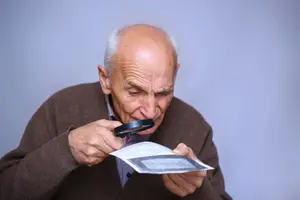
Many patients benefit from specialized low vision glasses designed for specific tasks such as reading, distance viewing, or driving. Others find success with magnification devices that enlarge text, photographs, and everyday objects.
Electronic video magnifiers can project enlarged images onto screens while allowing users to adjust contrast, brightness, and text size for maximum comfort.
Advanced software programs can increase font sizes, improve contrast, and make digital devices easier to use. Some newer technologies even incorporate virtual reality and image enhancement systems to support everyday activities.
The right solution depends on each person's vision, goals, and daily routines.
Low Vision Care for Macular Degeneration, Glaucoma, and More
One of the biggest misconceptions about low vision is that people simply have to accept the limitations that come with it.
While some changes cannot be reversed, many people are surprised by how much they can accomplish with the proper tools, training, and guidance.
The ability to read a favorite novel, recognize a grandchild's face, watch a sporting event, or maintain personal independence often provides benefits that extend far beyond vision itself. These activities help people stay connected, engaged, and confident.
A diagnosis such as macular degeneration, glaucoma, diabetic retinopathy, or retinitis pigmentosa can change how you see the world, but it does not have to define what you can continue doing. Low vision rehabilitation focuses on finding practical solutions that help you remain active and involved in the activities you enjoy.
Low Vision Services in Bakerstown and Natrona Heights
At Bissell Low Vision, we believe low vision care is about possibility. Our goal is to help patients throughout Southwest Pennsylvania, Ohio, and West Virginia maximize their remaining vision and continue living life on their own terms.
As a member of the International Academy of Low Vision Specialists (IALVS), Dr. John Bissell has received extensive training in low vision rehabilitation. Our low vision eye doctor takes the time to understand each patient's unique challenges and goals before recommending personalized solutions.
Whether you want to read more comfortably, improve your ability to recognize faces, continue driving, or maintain your independence at home, we work with you to identify tools and strategies that can help.
Schedule a Low Vision Evaluation in Natrona Heights & Bakerstown, PA
If vision loss has made everyday activities more challenging, there may be options available that you have not yet considered.
A low vision evaluation can help identify tools, devices, and strategies that support greater independence and improve quality of life.
Contact Bissell Low Vision today to schedule a consultation in Bakerstown or Natrona Heights and find out how low vision rehabilitation can help you continue doing the things that matter most.
When it comes to low vision, the focus should never be on what has been lost. The focus should be on what is still possible.