

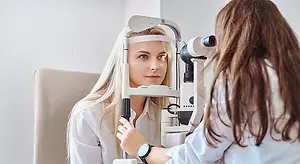
A Stargardt disease diagnosis can raise difficult questions about school, work, reading, driving, and independence. Although the condition affects each person differently, changes in central vision may make familiar activities increasingly challenging.
There is currently no cure for Stargardt disease, and conventional glasses cannot restore vision lost to retinal damage. However, a low vision optometrist can help patients use their remaining sight more effectively through personalized devices, technology, and practical strategies.
What Is Stargardt Disease?
Stargardt disease is a rare inherited retinal condition that affects the macula, the area responsible for detailed central vision. It is most commonly associated with changes in the ABCA4 gene, which can lead to the accumulation of fatty material in and around the macula.
Vision changes often begin during childhood or adolescence, although some people do not develop symptoms until adulthood. The rate of progression and degree of vision loss vary considerably between individuals.
Possible symptoms include:
- Blurry or distorted central vision
- Gray, dark, or hazy areas in the center of sight
- Difficulty recognizing faces
- Reduced color perception
- Sensitivity to bright light
- Slower adjustment between bright and dim environments
- Difficulty reading standard-sized print
Peripheral vision may remain useful for many people, particularly during the earlier stages of the condition.
How Are Macular Degeneration and Stargardt Disease Different?
Macular degeneration and Stargardt disease both affect the macula and can cause central vision loss. However, they are distinct conditions with different causes and typical patterns of onset.
Age-related macular degeneration usually develops later in life and is influenced by age, genetics, smoking, and other risk factors. Stargardt disease is an inherited retinal disorder that frequently becomes noticeable at a younger age.
Both conditions can make reading, recognizing faces, viewing screens, and completing detailed tasks more difficult. A retinal eye care provider may use a dilated examination, retinal imaging, color vision testing, or genetic testing to establish or confirm a diagnosis.
Can Stargardt Disease Be Treated?
There is currently no treatment that can cure Stargardt disease or reverse existing retinal damage. Patients should continue care with their ophthalmologist or retinal provider for appropriate monitoring and guidance.
Low vision care serves a different purpose. Stargardt’s low vision treatment focuses on improving how a person performs important activities with the vision they still have.
Low vision rehabilitation does not repair the macula. It provides tools and training that can make everyday tasks more accessible and help patients maintain greater independence.
What Can Low Vision Rehabilitation Include?
A low vision evaluation begins with a conversation about the activities that have become difficult. Instead of focusing only on an eye-chart measurement, the optometrist considers the patient’s personal priorities, environment, and remaining functional vision.
Depending on those goals, recommendations may include:
Specialized Low Vision Aids
Telescopic, microscopic, prismatic, or other task-specific devices may help with activities such as reading, viewing a television, recognizing faces, attending events, or working at a particular distance.
Magnification Devices
Handheld magnifiers, stand magnifiers, and electronic video magnifiers can enlarge printed material, photographs, medication labels, and other detailed objects. The appropriate power and design depend on the task and the user’s vision.
Digital Accessibility Tools
Smartphones, tablets, and computers offer features such as enlarged text, higher contrast, screen magnification, and text-to-speech. A low vision clinic can help patients identify settings and devices that fit their needs.
Lighting and Glare Control
Stargardt disease may cause light sensitivity or difficulty adjusting to changes in illumination. Task lighting, filters, hats, and UV-blocking sunglasses may improve comfort in certain environments.
Practical Strategies
Patients may learn techniques for using peripheral vision, organizing frequently used belongings, improving contrast, or modifying work and study areas. Recommendations are individualized because the same approach will not work for every person.
Who May Benefit From a Low Vision Evaluation?
A low vision evaluation may be helpful when vision loss interferes with meaningful activities, even after a glasses prescription has been updated. Patients do not need to wait until their vision becomes severely limited before asking about rehabilitation.
Consider scheduling an evaluation if Stargardt disease makes it difficult to:
- Read books, assignments, mail, or labels
- See faces or distant details
- Use a phone or computer
- Complete work or school responsibilities
- Enjoy hobbies and social activities
- Move between bright and dim environments comfortably
The goal is to identify realistic solutions based on what the patient wants and needs to accomplish.
Visit a Low Vision Clinic Near Natrona Heights
Living with Stargardt disease requires adjustment, but patients and families do not have to navigate those changes alone. Bissell Low Vision provides low vision rehabilitation at two Pennsylvania locations, helping patients explore specialized glasses, magnification, technology, and adaptive strategies.
Schedule a low vision evaluation to discuss the activities that matter most and discover which tools may help you use your remaining vision more effectively.
Frequently Asked Questions
Can ordinary eyeglasses correct vision loss from Stargardt disease?
Ordinary glasses may correct nearsightedness, farsightedness, or astigmatism, but they cannot restore central vision lost through retinal damage. Specialized low vision devices may provide additional assistance.
Is low vision rehabilitation only for older adults?
No. Stargardt disease often affects children, teenagers, and working-age adults. Low vision care can be tailored to school, employment, technology, hobbies, and other age-appropriate goals.
When should someone see a low vision optometrist?
An evaluation may be appropriate whenever vision loss makes everyday activities difficult despite conventional glasses, contacts, medication, or surgery.