
Diabetes can lead to a group of eye conditions that affect how well you see. If you’re experiencing vision loss related to diabetes, we are here to help you manage your eyesight with confidence.
Managing Vision Loss From Diabetic Eye Disease
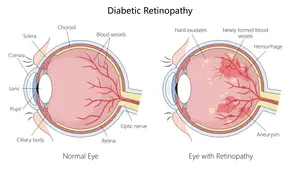
Diabetic Eye Disease: What You Need to Know
People with diabetes need to be especially vigilant in caring for their eyes. Diabetic eye disease includes several conditions that may develop over time, including:
- Diabetic Retinopathy – damage to retinal blood vessels
- Diabetic Macular Edema (DME) – swelling in the central retina
- Cataracts – clouding of the eye’s natural lens
- Glaucoma – increased eye pressure that damages the optic nerve
Each of these can lead to serious vision loss or even blindness if left untreated. Early detection is key. That’s why we recommend a comprehensive eye exam at least once a year, or more often if you’re already being treated for one of these conditions.
What Is Diabetic Retinopathy?
Diabetic retinopathy is the most common type of diabetic eye disease. It occurs when elevated blood sugar levels cause damage to the blood vessels in the retina, the light-sensitive tissue at the back of the eye.
Risk increases with poorly controlled blood sugar. Early symptoms may include:
- Floaters
- Blurry or fluctuating vision
- Dark spots or areas in your field of vision
- Difficulty seeing colors clearly
Over time, this damage may interfere with your ability to read, drive, or perform everyday tasks.
When Vision Loss Remains After Treatment
Even with medical care, some patients are left with lasting visual limitations. If you’re having trouble with reading, contrast, or daily activities after treatment, low vision care can help.
How We Support Patients With Diabetic Retinopathy
Dr. John Bissell provides low vision evaluations for patients living with diabetic retinopathy and related conditions. Our approach focuses on practical tools and strategies to help you use your remaining vision effectively.
Services may include:
- Customized low vision aids for reading and near work
- Lighting and contrast solutions to reduce eye strain
- Mobility guidance and task-specific training
- Ongoing support tailored to your health and lifestyle
Schedule a Low Vision Consultation
If diabetic eye disease is limiting your vision, we can help you find new ways to stay independent and engaged. Appointments are available at our Natrona Heights and Bakerstown offices.